
Uncategorized
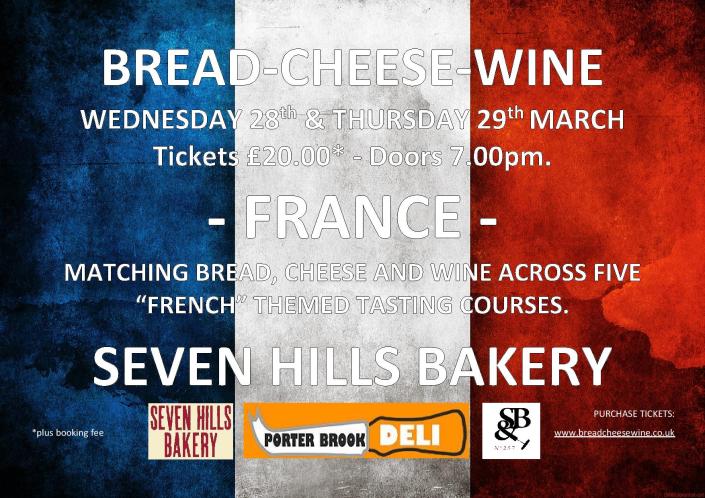
MARCH 2018 – FRENCH THEME
COURSES
- Chesnut Bread / Comte and Tomme de Savoire / Tomato Compote (sharp) /
- Yorkshire Square / San Nectaire / Mushroom Pate /
- Brioche / Ossau Irati / Fig Jam & Fresh Figs /
- Baguette / Munster / Green Salad /
- Hot Cross Bun / Roquefort /
FEBRUARY 2018 – VEGETARIAN THEME

COURSES
- / Torta de Barros / Dopff Au Moulin. Cremant d’Alsace
- / Cotherstone / Collectables Sauvignon Blanc, NZ /
- / Ribblesdale Goat / Meinklang Gruner Veltliner, Austria
- / Old Winchester / Fedele Nero D’Avola, Italy
- Ginger Cake / Devon Blue / CDR de Fleurs, Rhone, France
JANUARY 2018 – BEST OF 2017 THEME

COURSES
-
- Rosemary Potato Sourdough Bread / Rosemary Manchego / Olives, nuts and quince jelly/ Montecrio White Rioja, Spain
- Baton / Baron Bigod / Roasted Red Peppers / Giol Frizzante Prosecco, Italy.
- Beetroot Bread / Dorstone Goats and Innes Log / Roast Beetroot & Thyme / Mayfly Sauvignon Blanc, New Zealand.
- 100% Rye / Summerfield and Comte / Watercress and Parsley Pesto / Santa Macarena Pinot Noir, Chile
- Caraway Seed Cake / Cashel Blue / Neropasso, Italy
OCTOBER 2017 – ALTITUDE THEME
COURSES
- / Picos d’Europa / Chiarlo Gavi di Gavi
- / Sinodun Hill / Charles Smith Velvet Devil Merlot
- / Comte / Garzon Alabrino
- / Vacherin / Suavia Soave
- / Fellstone / Delaforce LBV Port
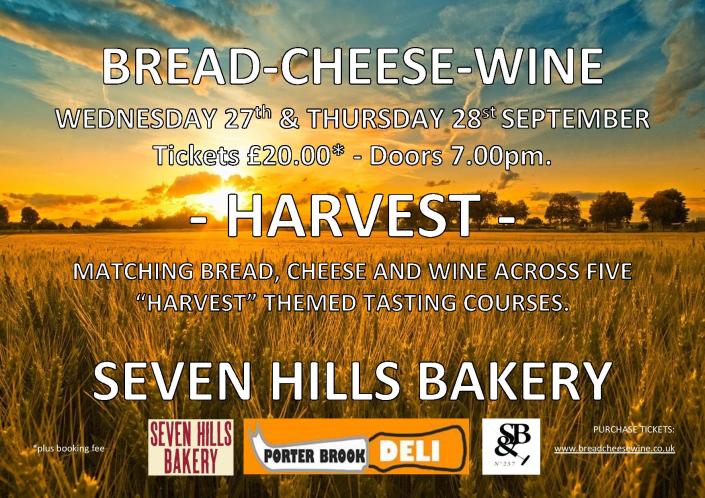
SEPTEMBER 2017 – HARVEST THEME
COURSES
- Baton / Ogleshield / Cornichons, Caper berries, Tomato / Wunsch et Mann Gewurztraminer
- Malt/Rye Bread / Fedeira / Corney & Barrow Margaux
- Potato & Olive Focaccia / Rollwright / Olives / Dao Branco, Portugal
- Squash Sourdough / Baron Bigod / Toasted Pumpkin Seeds, Beetroot Houmous / JCB Cremant de Bourgogne
- Date Scone / Lanark Blue / Roast Apple, Toasted Nuts / Justinos 5YO Madiera
AUGUST 2017 – ISLAND HOPPING THEME

BREAD
- Grape Foccaccia, Sweet Walnut / Killeen Goats Cheese / Stopham Pinot Blanc, UK.
- Potato Bread w/ Roasted Aubergine / Durrus or Gubbeen Cheese / Assyrtiko Santorini, Greece.
- Soda Bread and tangy Tomato compote / Young Buck / Clos Culumbo, Corsica
- Cottage Loaf w/ red onion marmalade / Coolea / Nibaru, Sardinia.
- Caraway seeded cake / Cashel Blue / Umeshu Plum Sake, Japan.
CHEESE
Killeen
Leaving Holland in search of the Irish ‘good-life’, Marion Roeleveld went on to develop Killeen – a goats’ milk Gouda made with milk from her own goats.
The Courtyard Dairy ages Killeen in-house for 11 months (8 months longer than normal Killeen), so the cheese develops a greater depth of flavour as the sweetness and toasty-roasted hazelnut flavours show through.
Made by Marion Roeleveld in Ballyshrule, Galway, Ireland
Durrus
Durrus is made by Jeffa Gill in Co Cork, where it has been made since 1979. Jeffa works with the milk of two local farmers on the Sheep’s Head Peninsula, whom she has used for over 25 years. The rind can be plump and pliable or slightly firmer with a bit of a savoury crunch and flavours range from mild to earthy, typically on the spectrum of butter and mushrooms.
Gubbeen
Gubbeen is a semi soft, washed curd, washed rind cheese, made by Giana Ferguson in Cork, Ireland. It is orangey pink in colour and has a somewhat elastic texture. It can be mild and sweet, or more intense with a mushroom flavour. Giana’s husband Tom’s family have farmed at Gubbeen for several generations. Giana came from Spain via France, with a cheesemaking background. She is responsible for the cheeses; he, the milk.
Young Buck
Young Buck is an outstanding, relatively new, raw-milk, blue cheese from Northern Ireland. An interesting take on a Stilton recipe, Young Buck cheese is traditionally made and hand-ladled to produce a rich, lingering flavour.
Made by Michael Thomson of Mike’s Fancy Cheese Co. at Newtownards, County Down, Northern Ireland.
Coolea
Dick and Helene Willems moved from Holland to County Cork, Ireland in the late 1970s. They started making Coolea on their own farm as a hobby in 1981, and the business was fully established by 1986. In 1998 their son Dick junior took over. Coolea can be sold young or matured for longer for a more interesting and intense flavour. The Coolea from Neal’s Yard is between eighteen months and two years old and its flavour is reminiscent of caramel.
Cashel Blue
Louis and Jane Grubb started making Cashel Blue when there was no blue cheese being made in Ireland. They were a part of the resurgence of Irish farmhouse cheese-making which had been underway since the late seventies.
In 2003 their daughter Sarah and her husband Sergio took on the running of the business. Geurt van den Dikkenberg is their cheesemaker.
Cashel Blue is made all year round using a combination of the milk produced on their own farm and bought in milk. Neal’s Yard select cheeses which we can mature for three to four months. This longer maturation helps to develop its rich, creamy texture and well-rounded flavour.
WINE
STOPHAM ESTATE PINOT BLANC, ENGLAND
THALASSITIS ASSYRTIKO, SANTORINI, GREECE
ETIENNE SUZZONI, CLOS CULOMBU ROUGE, CORSICA, FRANCE
ALBERTO LOI, MONICA DI SARDEGNA “NIBARU”, SARDNIA, ITALY
AKASHI TAI, SHIRAUME UMESHU PLUM INFUSED SAKE, JAPAN
JULY 2017 – PICNIC THEME

BREAD
Baton / Fresh Peas / Perroche / MayFly NZ Sauvignon
Flatbread / Roasted Tomatoes / Grilled Mushroom / Beenleigh Blue / The Den SA Pinotage
Buttermilk Bread Roll / Spanish Olive Crisp / Chutney / Mull Cheddar / Neige Ice Cider served in a picnic basket
Focchia / Watermelon / Cucumber / Feta / White Port w/ Double Dutch Cucumber & Watermelon Tonic
Strawberry Tart / Fresh Strawberry / Ricotta / Mateus Rose
CHEESE
Perroche
A soft, rindless goats’ cheese made by Charlie Westhead at the Neal’s Yard Creamery in Dorstone, Herefordshire. Delicate and lemony, it uses traditional rennet. It has no added rind, but retains its structure despite being a fresh cheese.
Beenleigh Blue
Made by Ben Harris from Ticklemore Cheese in Totnes, Devon, from the milk of 250 Friesland sheep. They are grazed outside Spring – Summer and Ben only takes their milk January to July to make Beenleigh Blue, which sees seasonal variations – form being flinty and minerally early season to more rich and robust later in the year.
The original recipe for Beenleigh Blue was developed by the founder, Robin Congdon and based on Roquefort, although it turned out to be quite different.
Once the Beenleigh Blue is set, it is dry salted on the outside, pierced and then aged in the ‘cave’ for three weeks to encourage the blue mould to form. The cheese is wrapped to discourage further blueing, then aged for a further three months at low temperatures to allow the complexities and the flavour to develop slowly.
Isle of Mull Cheddar
Made by Jeff and Chris Reade near Tobermory on the Isle of Mull on a farm powered entirely by a hydroelectric plant (fed by water channels that took them fifteen years to dig out) and two wind turbines that they also erected themselves. Summers are short on the island, so the herd of mainly Swedish Red and Meuse Rhine Issel cows spend a good deal of the year inside. They are fed on a diet that is split evenly between silage and spent grain husks, known as draff, from the distillery in Tobermory a mile or so away. The cheeses can have a wetter texture and a more alcoholic and fermented flavour, which was often put down to the draff in the cows’ diet. It is matured for between 13 and 15 months.
Feta
This is a barrel aged Feta made by the Roussas dairy near Volos on the Pelion Peninsula in mainland Greece. The cheese is kept in a small amount of brine to coat and preserve the cheese without covering it which would make it too salty.Feta is a protected name and herds of goats or sheep roam freely on scrubby pasture. The young ‘cheese’ is put in barrels and topped up with brine for about 100 days.
Westcombe Ricotta
Made by Tom Calver at the Westcombe Dairy near Shepton Mallet in Somerset since 2011. Westcombe Dairy is famous for making Cheddar, but ricotta is made from the whey left over from the cheddar making process which uses the curds.They say, “Our Somerset Ricotta is light and fresh tasting, with a rich, slightly grainy texture and a pleasantly salty, full dairy flavour. Ricotta can bend to almost any culinary use, from starters to desserts. If you’ve never had it, try some simply spread on toast with a little jam or olive oil, or drizzle it with honey as a quick dessert. It’s also perfect for cakes, pastries and puddings (try it in a cheesecake instead of cream cheese), and makes a lovely addition to savoury pasta or pastry dishes.”
WINE
MayFly New Zealand Sauviginon
The Den, South Africa, Pinotage
Neige Ice Cider, Canada
Sagrado White Port / Double Dutch Cucumber and Watermelon Tonic
Mateus Rose
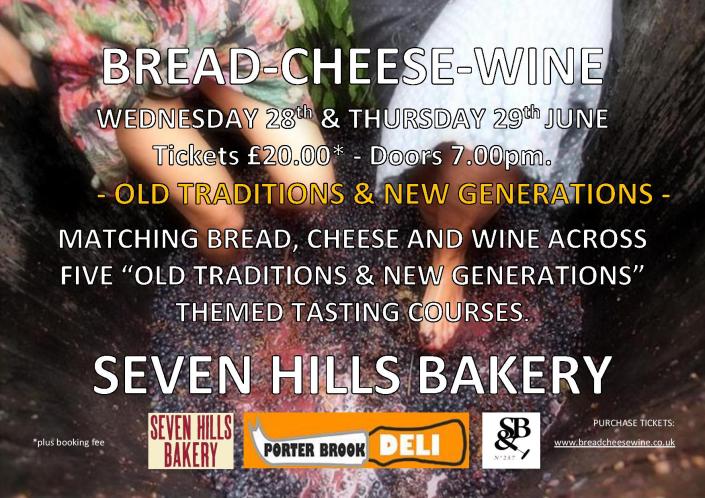
JUNE 2017 – OLD TRADITIONS & NEW GENERATIONS
BREAD
CHEESE
Colston Bassett Stilton
While Stilton is one of Britain’s best known cheeses, it is only made by six producers. Colston Bassett is one of the smallest.
It has been made here since 1913 and during this time, there have only been four cheesemakers: now it is Billy Kevan. The curds are hand-ladled, a time-consuming and painstaking process, but one that helps to preserve the structure of the curd. The resulting cheeses are more buttery in texture than that of mass-produced Stiltons.
Because of customer demand during the BSE scare of 1996, Colston Bassett was advised to use a vegetarian coagulant instead of the animal rennet they had always used. In 2000 Neal’s Yard asked them to produce a Stilton using animal rennet and to be less blue and longer ripened.
This latter change gives the cheese a less pronounced blue flavour, while the animal rennet lends the cheese a richer, more complex, and more long lasting flavour. The sticky pink rind is edible, if you like the taste.
Époisses de Bourgogne is made in Burgundy, France. Originally it was made by the monks of the region from the sixteenth century and is based on an even older recipe. It is a pungent, soft cheese with a washed rind. It is washed in brine and marc de Bourgogne brandy to produce the distinctive orange rind. This also produces almost meaty flavours, pairing well with burgundy wines and Trappist monk beers.
Wendolyn
This is only the second batch of this cheese released to retailers. The Trethowan Dairy has produced Gorwydd Caerphilly for years, but recently decided to develop a new cheese as they now have particularly good milk from their new location in Somerset. They decided to produce a washed rind cheese and they washed it with a local cider brandy.
Yorkshire Pecorino
A ewe’s milk cheese made in the North Leeds suburb of Adel, Yorkshire Pecorino Fresco is just about as local as it gets. This little beauty is perfect for those of you with a fondness for Mediterranean cuisine. It’s made by Mario Olianas, who’s created a delectable 30 day aged pecorino, using his family’s traditional Sardinian recipe.
Summer Field
Only made when the cows are at pasture during the summer months, this cheese is in extremely short supply. Made to a Gruyère recipe, it has that sweet, supple nuttiness associated with the best Gruyères.
Made by Alastair Pearson at Botton Creamery (near Whitby), North Yorkshire, England.Botton Camphill Community makes a range of traditional farmhouse cheeses using full-flavoured, quality milk collected from the community’s 46 Dairy Shorthorn cows (a traditional Craven breed known for the superb quality of their milk).
Alastair travelled to Germany to learn his cheese-making trade. Using this knowledge, and the Dairy Shorthorn’s rich, yellow milk, Alastair makes Summerfield, this Alpine-style cheese. Gruyère-style cheeses are notoriously difficult to make and cannot be made from silage-fed animals (for technical reasons), so whereas Botton’s Dale End Cheddar can be, and is, made all year round, Summer Field is only made when the cows are out at pasture and thus in very limited supply. This pasture-grazing gives the cheese its name – Summer Field.
WINE
Il Pumo Primitivo Salento
Salento is at the southernmost part of Italy in the heel end.The climate is very dry with hot summers ,welcome relief comes from the onshore breezes which in turn allows the vines to rest. San Marzano is a well established winery producing a wide range of full flavoured red wines in particular. The harvest took place over a two week period in early September. This Primitivo ( Zinfandel in California )is well balanced and a little fresher than previous harvests allowing us to pair with the chosen cheese. The grapes under go a ten day cool maceration in stainless steel tanks to retain the fresher flavours. As the wine opens up the more herbaceous notes appear.
Hommage de Pays Marsanne by Boris Kovac 2013 12.8 (13%)
Situated in the Languedoc near Minervois 30 minutes to the East of Carcasonne the soils vary with sandy top soils lower levels of limestone and dense rock. This comes over in the wines of the region allowing a huge diversity of grapes and styles. This wine has a small amount of Riesling which keeps the wine fresh and layers of fruit appear. on the palate. A long fermentation at a low temperature occurs in epoxy lined concrete tanks. The wine spends two months ageing on the lees which gives a light creamy feel. Lovely zesty citrus notes keep the fruit keen. Boris Kovac hails from Serbia and was discovered by our supplier in 2008 while travelling through vineyards in the region. They got on so well that we now feature at least six wines from Boris !
Cremant de Bourgogne Blancs de Blancs Mancey
This wine is made close to the town of Macon in Burgundy using mainly Chardonnay grapes for elegance and some Aligote to keep the acidity high and wine fresh to the core.Appley notes throughout the long mousse on the palate. The grapes are only pressed lightly to use the best juice .The wine is made in the traditional method as in the Champagne region to the north.After the first fermentation in large vats the wine is bottled and left to rest in the cellars for 18 to 24 months before the bottles are. The next process is called Remuage as the bottles are gradually up-ended which takes several weeks. The deposit is then removed (disgoring) and bottles are sealed for the next journey. Mancey belong to a group of twenty Vignerons who want to concentrate on the farming and wine making and let the BVV run their business side.
Bourgogne Rouge Michel Magnien 2012 Organically farmed.
This is very traditionally made by organic farming methods .Using Pinot Noir grapes from the families own vineyards near Morey Saint Denis. Michel learned his trade from his father Bernard who let him have his own four hectares when he was just a teenager. Now he runs the vineyards with his wife Dominique who are both passionate about tending the vines from root to grape. This is a lovely complex Pinot displaying savoury fruits as well as deep cherry notes. The oak is restrained after a period in large French barrels used year on year. Pinot is one of the hardest vines to tend !
Feuerheed’s Fine Tawny Port 19.5%
The families of Barros and Van Zeller joined forces to make these Port wines made in the Douro Valley and aged in Vila de Gaia on the banks of the Douro river. This wine is made from five of the main Port grapes,Touriga Nacional,Touriga Franca,Touriga Roriz,Tinta Barocca ,Tinta Cao.The Tawny gets it’s colour from a short period in small barrels none as pipes .The grapes are whole bunch pressed and soaked to extract some of the colour from the skins. A slow two day fermentation ensues to keep the fresher flavours. This Port has savoury notes and slightly less sweetness than some of the richer styles. 1
MAY 2017 – ITALY THEME

Fontina Val d’Aosta
Fontina is a classic Italian cheese made in the Aosta Valley since the 12thcentury. There are many Fontina cheeses made with alternative names such as “Fontinella”, “Fontal”, and “Fontella” but the Italian Fontina, Fontina Val d’Aosta, identified by a Consorzio (Consortium) stamp is the original and most famous. The other versions are much milder than the original Fontina. There is also a Danish version which can be recognized by the red wax rind. Italian Fontina has a natural rind that turns tan to orange-brown with aging.
Fontina Val d’Aosta is traditionally made from unpasteurised milk of the Valdaostan Red Spotted cows grazing on the plains of Aosta Valley. The texture and flavour of Fontina depends on how long it has been aged. The texture can vary from semi-soft to firm and the flavours from mild and rich to more robust and overpowering. Usually, fontina is aged for 90 days.
The interior of fontina is pale cream in colour and riddled with holes known as “eyes”. With a fat content of 45%, the cheese is very rich and creamy which gets nuttier with aging. This versatile cheese can be used to make fondues, and similar Italian dishes. Nebbiolo, a red wine with wild cherry and truffles is a match for Fontina.
Burrata
Burrata, meaning “buttery” in Italian is a fresh cheese made from a mix of mozzarella and cream. The outside thin shell is a pasta filata curd made of buffalo and/or cow’s milk mozzarella while the insides contain a soft, doughy, stringy, mixture of curd and fresh cream. The cheese originated in the Apulia region of Italy known for sheep farming and agriculture. It is sold traditionally in asphodel leaves with a polyethylene plastic bag over it. The green colour of asphodel leaves is an indicator of the freshness of the cheese.
When you cut open a Burrata, it oozes with buttery and creamy pannacontaining scraps of mozzarella. The cream has a rich flavour and has to be eaten immediately since it is a fresh cheese. Burrata is usually served fresh at room temperature and beyond 48 hours, it is considered past its prime. The taste of Burrata goes well with salads, crusty bread, and prosciutto, fresh tomatoes with olive oil and with spaghetti.
Quadrello
Quadrello di Bufala is a water buffalo milk cheese produced by the Caseficio Quattro Portoni Company in the Lombardy region of Italy. Made from pasteurised milk, Quadrello di Bufala is a washed-rind cheese high in fat and protein. It shares several attributes with Taleggio or Brescianella Stagionata, except that it is made from the milk of water buffalo.
The texture of Quadrello is deliciously creamy, sticky and elastic with small holes and softness near the crust. Its semi-soft paste is straw yellow in colour, while the pale orange rind is dotted with occasional white mould and deep incisions that occur because of drying on straw mats. The flavours are sweet and grassy with aromas of earth, mushroom and strong pungency. Quadrello di Bufala pairs well with Riesling, Cider, Farmhouse Ales and Malbec.
Marzolino
All the cheese produced in spring when the sheep could finally feed on fresh grass, was once known as Marzolino (made in March). This cheese is now produced all year round so the name now identifies a specific type of cheese with a specific shape (each producer may make it in a different shape), rather than its period of production. The shape of our Marzolino varies from piece to piece as it is totally handmade.
The cheese making process is identical to that of fresh pecorino cheese but the real difference is in the salting stage and in the turning over of the pieces. In fact, they are placed next to each other and in the first two days they are turned over 6 times to ensure they take their particular shape, which is their unique characteristic.
Finally, a light ageing process, which ranges from 5 to 10 days or more, takes place at room temperature and controlled humidity. This depends on the period and desired “abbucciatura” (rind consistency).
Gorgonzola Dolce
Meaning “sweet” in Italian, Gorgonzola “Dolce” DOP is a soft, blue, buttery cheese made with uncooked cow’s whole milk. The cheese took its name from a small town in Lombardy near Milan, where it said to have been born in the 12th century. It has a white or pale yellow, buttery and melty paste speckled with a homogeneous distribution of blue coloured veins. The rind is compact, rough, hard and grey/pinkish in colour but not edible. Flavours are not very assertive but sweet, mild with notes of sour cream and lactic tang. It takes a minimum of 50 days ageing to let Gorgonzola demonstrate its unique characteristics. The cheese pairs well with a Tuscan Vin Santo and Champagne
Rimini: a great city narrated by a great movie director. Amarcord: Federico Fellini’s great movie, an Oscar winner in 1975, and for us a story of fine traditional flavors, a brand and a production philosophy. From these simple ingredients the first Amarcord beers were created in the 1990s. After the success of the first few years, the time came to grow even further. We started looking for a water that would give our beers a truly unique touch, and in 2008 we found it in the heart of Italy’s Central Apennines at the foot of Monte Nerone, in the town of Apecchio.
Pure water and premium hops, tradition, artisan skills and technology have made Amarcord Italy’s most famous and widely sold craft beer brand. Quality beers for connoisseurs, without compromises.
Bepi Tosolini represents the highest expression of quality in the grappa sector.
The history of Tosolini grappa begins after World War II, when Bepi Tosolini dedicated himself to perfecting the art of grappa production. A passionate cultivator of his land’s traditions and a revolutionary in his field, Bepi was the first to obtain a clear, limpid distillate through an innovative ageing process in ash barrels. Using only the freshest premium grapes, Bepi achieved a final product with an exceptional aroma, flavour and smoothness that has forever transformed grappa into an elite drink for the most refined palates.
Located at the foot of the eastern Friulian hills, Tosolini’s modern facility maintains its original installations and ensures the authenticity of its product. The art inspired by Bepi Tosolini lives on in his successors, now third-generation distillers. His son Giovanni, along with his grandchildren Giuseppe, Bruno and Lisa, now carry on the Tosolini legacy. Together, they strive to keep the craftsmanship and excellence of Master Bepi alive through a relentless pursuit of quality and purity.
This Grappa is made from a mixture of different Marc’s or grape varieties by the head distiller at Bepi Tosolini. Light and crisp and fragrant with a hint of almond oil.
BISCARDO NEROPASSO
APRIL 2017 – ELEMENTS THEME

BREAD
EARTH: Beetroot Bread / Beetroot / Tetilla / La Amistad & Pheasants Tears
WATER: Smoked salt roll / Macerated Strawberry / Mahon / Ocean
AIR: Digestive Biscuit / Rhubarb with juice / Monte Enebro / Petritis
WATER/AIR: 100% Rye Bread / Watercress and Parsley Pesto / Fontina / Santa Macerena Pinot Noir
FIRE: Tea cake / Plum / Picos de Europa / Vino de Anna Etna Rosso
CHEESE
TETILLA
The green fields of Galicia, in the far north west of Spain, are known for the quality of their pastures from which come some of Spain’s best known cows’ milk cheeses including Tetilla, the region’s most iconic cheese. Made using pasteurised milk, this cheese has a lightly acidic and buttery aroma, a dense smooth, semi-soft paste, and good balance of lactic and creamy flavours. It is particularly good when used in cooking.
MAHON
Mahón is the iconic cheese of Menorca with a distinctive square shape and rounded edges. The vibrant, orange coloured rind is created by rubbing it with pimentón and olive oil as it matures. The semi-hard, sometimes crumbly texture has a fruity, fresh and creamy aroma complemented by rich, savoury and yoghurty flavours. This product has been awarded with 2 stars in the Great Taste Awards 2016. The judges’ comments were:
“Very good flavours rolling round the palate, with sweetness and savoury notes, creamy and fruity on the palate. Good firm texture and full bodied aroma and flavour. This cheese has a creamy mouthfeel and is full of flavour.
MONTE ENEBRO
Pasteurised. Very smooth, dense texture with some creaminess. Grey rind and an intense white paste. Flavours of sweet cream, very mild goatiness and a fruity acidity. From La Adrada, in Castile and Leon, Spain. It is aged for twenty to thirty days.
FONTINA
Fontina d’ Aosta is from raw milk in the Aosta valley in Piedmont, Italy. It has an earthy quality and is very good for melting and for use in fondues. This is a washed rind cheese, with weekly washing to encourage the rind to form and develop the flavours in the cheese.
PICOS DE EUROPA
The Valdeón (Picos de Europa) is a pasteurised blue cheese made from a blend of approximately 90% cows’ and 10% goats’ milk. This highly recognisable maple leaf wrapped cheese, has a creamy and mushroomy aroma, a buttery melting texture and nutty, savoury, sometimes spicy flavours. It is delicious by itself or used to cook with.
WINE
EARTH: LA AMISTAD (SPAIN) & PHEASANTS TEARS (GEORGIA).
La Amstad is 100% Rojal. Not much is known of this local variety. Once planted widely in the 19th century around South-East Spain for both eating and wine when irrigated it gives very large bunches and yields copious litres of juice. When not irrigated it gives a very thick skin which lends itself to late harvesting and for keeping stored over the winter months so families could continue eating grapes for up to 6 months after harvesting. It is of rustic character with marked salty and mineral touches. These are pure, “minimal intervention” wines at the forefront of Spain’s slow move towards more elegant, terroir driven styles from Alicante, South-East Spain where the climate is hot, humid and Mediterranean.
Pheasant’s Tears estate vineyard plantings flow down the slopes of the eastern Georgian Kiziqi province overlooking the Alazani Valley and snow-capped Caucasus Mountains. Qvevri were the first vessels ever to be used for wine fermentation, with archaeological finds dating back to 6000 BC. Qvevri are clay vessels lined with beeswax and completely buried under the ground where the temperature stays even throughout the year, allowing the wines to ferment in the natural coolness of the earth. Pheasant’s Tears qvevri vary in age but some date back to the mid 19th century. The cellar is built in the vineyard itself to minimize the damage to the grapes in transportation, allowing harvesting and process before the heat of the day takes effect. In accordance with Georgian traditional wine-making methods, the ripest of stems are added to the grape skins, juice and pits, for both reds and whites. The maceration time depends on varietal and the size of the qvevri and varies between 3 weeks and 6 months. The Rkatsiteli is from thirty year old vines, fermented naturally for thirty days with wild yeasts in clay Georgian qvevri buried underground. The wine is neither filtered nor fined and only a touch of sulphur is added at bottling. Golden amber in the glass with a nose of wild honey, but dry, and unexpectedly, full-bodied in the mouth with background notes of walnut and apricot.
WATER: OCEAN THRAPSHATHIRI, DAFNES, IDAIA WINERY.
A bright, uplifting wine, with delicate fruit aromas followed by a generous and spicy mouthfeel with hints of liquorice and pine and a refreshing herbal, saline finish. Idaia Winery is located in Venerato, a village in the heart of the vineyards of the Malevizi district, which is part of the Dafnes appellation area. Idaia is a family company, specialising in producing wines from indigenous grapes. The indigenous variety of Thrapshathiri (pronounced Thra-psa-THEE-ree) is grown in vineyards located at an altitude of 400 to 500 metres above sea level.
AIR: PETRITIS, TROODOS MOUNTAINS, CYPRUS.
Delicious aromas of citrus fruits, candied lime, litchi and a touch of spice and vanila. A medium bodied yet refreshing wine with a long, persistent finish. The winery is located at Kyperounda, in the Pitsilia area of the Troodos mountain range, 50 km from Limassol. At an altitude of 1140m, it is higher than any other winery in Europe.
AIR/WATER: SANTA MACARENA PINOT NOIR, ESPINOS Y CARDOS, CHILE.
This wine is bright, aromatic and fresh with subtle oak play ing a supporting role. The emphasis on the delicious red fruit flavours, drinkability and enjoyment. A single vineyard Pinot Noir from one of the most coastal vineyards in Chile in San Antonioi just 5 km from the ocean, within a small vineyard region 55 miles west of central Santiago and just south of Casablanca Valley. Morning mists and spring frosts, often associated with the Napa Valley and Bordeaux are brought from the west coast by the Humboldt current.
FIRE: VINO DI ANNA, ETNA ROSSO
Anna Martens and Eric Narioo started making wine together on Mount Etna in 2008. In 2010 they purchased their first vineyard of old, vine Nerello Mascelese and a 250 yr old palmento and wine building which they restored and “Vino di Anna” was created. Today they own 6 hectares of land which they farm biodynamically.
Mount Etna is an incredible place to grow vines. The soils are black, fertile and rich in minerals. The volcano is in constant eruption, often sprinkling the vineyards with fresh cinders. The vineyards are located along terraces at high altitudes (600-1200 metres). The climate is extreme making it both an exciting and challenging place to make natural wine.
Vino di Anna makes a range of natural wines. The vineyards are farmed organically and tended by hand. The grapes are all hand harvested. The vines are alberello (bush vines) and range in age from 60 – 100 plus years old. Nerello Mascalese is the principal red grape. The white is a field blend of local grapes, mainly Grecanico and Carricante. The wines are made with minimal intervention, natural yeasts, no additives, no fining or filtering. Little or no SO2 is used.
 BREAD-CHEESE-WINE